If Simon Sinek and John Oliver had a baby, this is it. Every Monday and Thursday 13k+ subscribers get a lump of leadership lessons with a healthy helping of humor. “It’s the only newsletter I read in full every week,” said a lot of people.
296. From Small Changes, Big Changes Happen
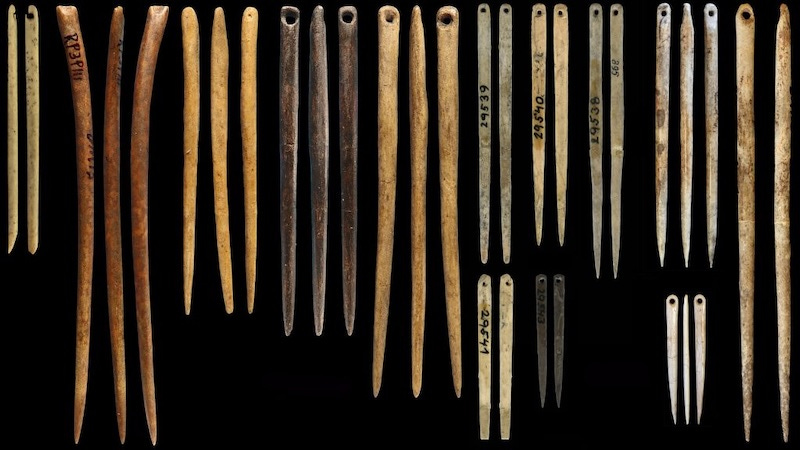
25,000 years ago, our early ancestors created a small invention that, as it turns out, would have a monumental impact on the growth and development of modern man. No, it wasn’t the ability to control fire. I know that’s what you were thinking. That invention was about 400,000 years ago. Nice guess, though. You were only 375,000 years off. It wasn’t the invention of the wheel, either. You’d be shocked to learn when that happened (or watch this video). The small invention I am referring to - the one that dramatically altered the trajectory of humankind - was the sewing needle. I know. I was shocked too. Let me tell you more about this, because the lesson from it has a lot to do with how you run your team and how you can transform your life.
The Needle That Changed HumanityHumans originally evolved in Africa. The first human-like creatures first appeared there around 7 million years ago, give or take a few months. The modern human - the one that mostly looks like us and moves like us - came into being about 300,000 years ago. For reasons I shan’t get into now, some of them began migrating out of Africa about 100,000 years ago. The natural progression for these nomads would’ve meant they’d crossed from Northern Africa into Europe, the Middle East, and over to Asia. Keep in mind, they all stayed in the southern parts of the continents where it was warm. Things got a bit chillier if they ventured any further north away from the equator. They simply couldn’t survive the brutal cold. Then, 25,000 years ago, one of them carved up a sewing needle. From that small discovery, big things happened.
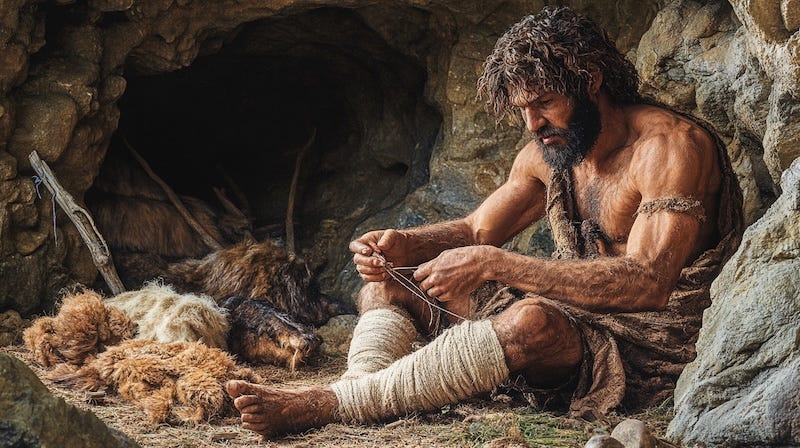
From Small Things Big Things HappenThe invention of the needle and thread was the first time people could sew things together - like, say, nice cozy animal fur. The sewing needle was the invention that allowed our ancestors to effectively create layers of clothing, build insulated boots, and finally survive year-round in frigidly cold environments. Because of the sewing needle, people began to travel north, throughout Europe and Asia, and even into Siberia. Finally, about 15,000 years ago, a tribe of people crossed the Bering Strait, from Siberia to Alaska, and began inhabiting North America. They became the Inuit, and the Eskimos, and the Native Americans. All because of a sewing needle.
One Small ChangeKatie is a client of mine. You don’t know her, but she’s smart and driven and, basically, she’s a rockstar. It’s no surprise to me that she is second in command at a $100m company. I’ve been hired by her company as a leadership team coach. I am helping transform their team into a more cohesive, communicative, and accountable unit. In her role, Katie is responsible for managing a lot of different things. She has a ton of stuff on her plates and she’s trying to spin all of them at once. I recently began chatting with her regularly on Zoom to help guide her toward building the team she envisions. It didn’t take much to notice that every time we talked, she was multitasking. She had a lot to get done, I get it. But, contrary to popular belief, multitasking doesn’t actually make you more productive. And, frankly, it’s annoying to the person you’re talking with. So after a few Zoom calls with Katie, I brought it to her attention. “You don’t seem to be focusing on the conversation we’re having,” I said to her. “If you’re multitasking during your employee conversations, which I’m guessing you are, your employees are going to feel unheard and deflated. They’ll think you don’t care and they won’t want to talk with you. I suggest you stop and listen.” So she stopped doing it. It was just a little change. A needle-like adjustment. Katie reached out to me a week later. “I’ve seen a difference already,” she said. People immediately reacted more positively to her, they showed her more respect and she had more engaging conversations. Most importantly, by stopping the multitasking, her meetings were shorter and more productive. Go figure. You’ll get more done in less time when you stop trying to do more stuff in less time. From one small change, big changes happen.
Small Things with Big ImpactGoogle’s 20% Project was a small change. Google encouraged employees to spend up to 20% of their time working on personal projects or innovating in ways that were outside the scope of their regular jobs. The results of this small change have impacted the world. The 20% Project was the birthplace of fan favorites like Gmail, Google Maps, and AdSense. -- Meanwhile, at Amazon, Jeff Bezos made a small change by creating the “2 Pizza Rule”. He declared that every team should be small enough to be fed by only two pizzas. The result of this small change was massive. It led to better communication, more effective decision-making, and increased innovation, all of which allowed Amazon to scale faster than almost any company in history. -- In the 1960s, Toyota made a small change by empowering all their assembly line workers to pull the Andon Cord (an emergency stop button) if they noticed a defect in a car part. The result of this small change was the creation of a culture of continuous improvement with better quality control and fewer errors. Their process has since become the standard for car manufacturers everywhere. From small changes, big changes happen.
Small Changes Can Transform Your TeamThere are always small changes you can make in your work. All you need to do is look for them.
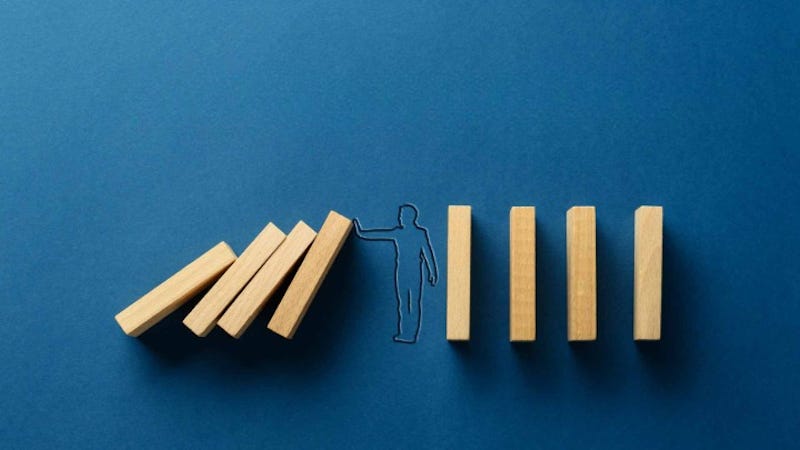
Or maybe you’ll take a bigger step and enlist an executive coach to help your leadership team take the company to its next level. (Nudge nudge hint hint wink wink.) It’s Time To Make Big Changes In Small WaysIt’s easy to get overwhelmed at the thought of making big changes. I know that feeling all too well - it was my specialty earlier in my career. Like a lot of others, I believed that huge change required a huge effort. I was wrong, and so are you if you believe the same thing. A simple sewing needle changed the course of human history. Maybe it’s time to put the haystack aside. Do you want to better understand how small changes can make a big impact on your team? If so, we should talk. |


The Best Leadership Newsletter Ever
If Simon Sinek and John Oliver had a baby, this is it. Every Monday and Thursday 13k+ subscribers get a lump of leadership lessons with a healthy helping of humor. “It’s the only newsletter I read in full every week,” said a lot of people.
In the 1960s, corporate decision-making was mostly hierarchical. Leadership made the decisions, employees did what they were told. Knowing that, it makes Toyota’s 1966 policy changes all the more surprising. You see, Toyota leadership decided to let their lowest-level employees make the types of decisions that could cost the company a massive amount of money Specifically, they empowered the assembly line workers to pull the Andon Cord. <cue foreboding sound> The Andon Cord is an emergency...
I got injured right as I started training for the New York City Marathon. I’m not surprised.My wife wasn’t surprised.My friends weren’t surprised.Nobody was surprised. It’s the type of thing I do - I injure myself at the most inopportune time in the most ridiculous way. I once tripped on the sidewalk and broke my back in two places. I once slipped off a cliff and hung on for dear life until someone came by with a rope to pull me to safety. But back to the NYC Marathon. It turns out I strained...
294. Perfection Is Not The Purpose My daughter’s elementary school recently underwent a few upgrades. They redesigned the library, created a new lunch area, and updated the playground with some really nifty structures that I wish were in the playgrounds I played in as a kid. It all looks so perfect. Next to the playground, the school built a new walkway that climbs the slow rise to the administration building. Not coincidentally, the walkway has 26 steps, each representing a letter of the...